Life Sketch of Dr. Krishna Bahadur.
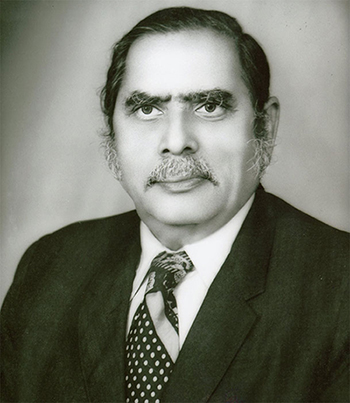 It is the ambition of every believer in Hindu religion to take a dip in the Sangam, the confluence of the two Holy Rivers Ganga and Jamuna and the invisible Saraswati, and this is here that the city of Allahabad is situated. And here the famous University of Allahabad holds sway over the intellectuals of the northern part of India, training the youth of the country and producing Politicians Professors and Philosophers with equal ease and efficiency. The soil of the land seems to have a special effect on the mind, thinking, and living of the people.
 In such a city, Dr. Krishna Bahadur was born and brought up. He received all his education from High school to the degree of Doctor of science .He was born in Allahabad on the 20th of January 1926 and passed his High school in 1940. He did his B.Sc. and M.Sc. from the University of Allahabad and was awarded the degree of Doctor of Philosophy in Chemistry in 1949 and the degree of Doctor of Science in 1956. He obtained his D.I.C in Microbiology from the Imperial College of Science and Technology in London in the year 1962.
The only interest Dr. Bahadur had was research and teaching and the only job he applied for and secured was a teaching post in the University of Allahabad. He was appointed as a lecturer in the University of Allahabad in 1950 and served there till he retired in 1986, as the professor and the head of the department of Chemistry.
After his Post graduation in chemistry, with specialization in Organic Chemistry, Dr. Bahadur devoted himself entirely to the pursuit of research. He joined the school of the illustrious and eminent researcher Dr. Neel Ratan Dhar and was awarded his D.Phil. and D.Sc. degrees working under him. During these researches he isolated the yeast Pichia Indica from the local Toddy, which could utilize the ethyl alcohol produced for its growth. Depending upon the Hydrogen ion concentration of the substrate: loss or fixation of nitrogen was observed.
Fixation of nitrogen was the target of the study of scientists and Agriculturists and its universal deficiency in the soil is a challenge to all. The study of Photochemical Fixation of Nitrogen in keeping up the Nitrogen fertility of the soil was taken up in earnest by Dr. Dhar. Dhar and Mukherjee (1936) observed increase in nitrogen content of a sample of sterilized soil exposed to sunlight with suitable energy materials, while the sample kept in dark showed negative results. Similar results were obtained by replacing soil with pure chemical surface such as Zinc Oxide, Ferric Oxide, Nickel Oxide, Manganese Oxide, and Barium Sulphate etc, under sterilized conditions.
Bahadur observed in 1954 that when a sterilized aqueous mixture of Paraformaldehyde, potassium 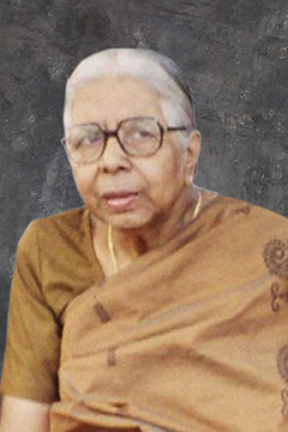 nitrate, and ferric chloride is exposed to sunlight, about a dozen of amino acids are formed. This led him to the investigation of the possibility of nitrogen fixation without the help of bacteria and subsequent utilization of the fixed nitrogen in the formation of Amino acids. Dr. Krishna Bahadur, Ranganayaki, and Santamaria 1958 have observed this photosynthesis of amino acids involving the fixation of atmospheric nitrogen in aqueous sterilized mixtures containing Paraformaldehyde and colloidal Molybdenum oxide exposed to light from a 500-watt electric bulb. Dr. Krishna Bahadur extensively studied this photochemical fixation of nitrogen using Iron, Nickel, Cobalt, Molybdenum, Vanadium, Zinc, Manganese, Magnesium, Copper, Beryllium, thorium, and Uranium, singly and in combination as well. A few photodynamic catalysts such as phenanthrene, fluorine, anthracene etc, have also been observed to act as efficient catalysts in this process.
nitrate, and ferric chloride is exposed to sunlight, about a dozen of amino acids are formed. This led him to the investigation of the possibility of nitrogen fixation without the help of bacteria and subsequent utilization of the fixed nitrogen in the formation of Amino acids. Dr. Krishna Bahadur, Ranganayaki, and Santamaria 1958 have observed this photosynthesis of amino acids involving the fixation of atmospheric nitrogen in aqueous sterilized mixtures containing Paraformaldehyde and colloidal Molybdenum oxide exposed to light from a 500-watt electric bulb. Dr. Krishna Bahadur extensively studied this photochemical fixation of nitrogen using Iron, Nickel, Cobalt, Molybdenum, Vanadium, Zinc, Manganese, Magnesium, Copper, Beryllium, thorium, and Uranium, singly and in combination as well. A few photodynamic catalysts such as phenanthrene, fluorine, anthracene etc, have also been observed to act as efficient catalysts in this process. Image shows dr Ranganayaki.
Dr. Bahadur then proceeded to investigate whether carbon dioxide dissolved in water can be substituted for Paraformaldehyde and the experiment yielded positive results.
Professor A.I.Oparin who is aptly called the pioneer in the field of study of origin of life organized an international symposium on the origin of life on Earth at Moscow in August 1957 and Dr. Krishna Bahadur was invited to participate in this and his paper entitled “Formation of compounds preliminary to the synthesis of protoplasm and other materials of biological importance.“ was presented.
In this context, Prof. A.Neuberger F.R.S of St. Mary’s hospital Medical school, Department of chemical pathology, St Mary’s Hospital London W2, Wrote on 3rd June 1958 to Dr. Bahadur “I have been aware for a little while that your work has been confirmed by a number of people and that my early skepticism which was based on the attempts of one of my colleagues while I was at Mill Hill to repeat your observation was unjustified. It is really an important piece of work and you deserve considerable credit for having been the first in the field which will probably expand considerably.”
The next step in the field of research was the photosynthesis of peptides observed in an aqueous mixture of Amino acids, organic acids, sugars, and inorganic catalysts as colloidal Iron, Molybdenum oxide etc. as also the organic catalyst Benzoyl peroxide. Weaker sources of energy were used viz., sunlight or artificial light, because stronger sources of energy, if employed, quickly breakdown the molecule formed. (1958-1961). As some of these peptides may be enzymically active, an investigation of the enzymatic activity was undertaken and phosphatase activity was observed in the exposed mixtures as also esterase activity.
In 1963, Jeewanu the particles that grow from within multiply by budding and have metabolic activity were synthesized photochemically by Bahadur using simple organic and inorganic substances. Jeewanu is a Sanskrit word, which means ‘Particles of life’. These were the first living particles synthesized from lifeless material. This work on the synthesis of Jeewanu was confirmed by the English scientist Dr. M.H. Briggs who presented a paper in the fourth international conference on photobiology held at Oxford in 1964. He published another confirmation of the work in the journal ‘Spaceflight’ in 1965. According to Dr. Briggs himself this was a report on the extension and confirmation of Dr. Bahadur’s work. The scientists of USA DR. Mueller and Rudin D.O. further confirmed the work in 1970. Dr. Krishna Bahadur and co-workers also synthesized Jeewanu with materials absent in the cells of to day. These Jeewanu have distinct internal structure and a boundary wall. They can be fixed with biological fixatives and stained with a number of biological dyes, showing the presence of Phospolipids, sugars, nucleotides and cytoplasm like material etc.
Prof. Dr. Jakob Segal 1017 Berlin on 14-6-78 wrote to Dr. Krishna Bahadur.“I just came back from a symposium on Natural selection in Czechoslovakia where I met Oparin. After my lecture I had different discussions regarding your work. Besides positive appreciation, I also heard expressions of mistrust. … I also heard the opinion that such results may be due to bacterial proliferation in your vessels. This I cannot agree with. … In this case the assumption of a bacterial proliferation appears completely absurd. In a vessel with 140 ml of liquid you add 10 ml of a 30% Formaldehyde solution, thus establishing a 2% formaldehyde concentration. In such a medium, no bacterium can grow… Every single event in Jeewanu can be discussed on the basis of concrete physical knowledge.”
The work on Jeewanu progressed in the laboratories of Bahadur and a team of scientists was engaged in this work. The exposure to sunlight initially needed longer duration and modified particles were prepared which required exposure of lesser duration 1970. In 1978, a collaboration was formed with Dr. D.O. Hall and his group at King’s college London and the presence of ferredoxin like material was detected and these Jeewanu could successfully replace the ferredoxin of the system of chloroplast-ferredoxin-hydrogenase for the photolysis of water. In 1980, in collaboration with Dr. Adolph Smith of Ames research center NASA and Dr. Clair Folsome of Hawaii University, the presence of nitrogenase like activity was confirmed in these microstructures. On exposing an aqueous mixture of Molybdenum microstructure with D2O to light keeping acetylene in the overhead space, the formation of ethylene as CHD=CHD showing that protons were derived from D2O was observed. Further investigations also using 14C and 15N confirmed the photochemical fixation of Carbon and molecular Nitrogen by the aqueous mixture of Jeewanu 1981.
In spite of the limited facilities available in the chemistry laboratories of Allahabad University, a lot of work was carried out by the research group headed by Dr. Krishna Bahadur, and every single experiment in this field was confirmed in other laboratories leaving no trace of doubt in the results.
Dr. Bahadur was a fully dedicated worker in the field of the study of Origin of life and that was his main field of study. He had carried out researches in the study of fermentation, cellulose fermentation etc. He had also devoted some research studies on the isolation and study of the active principles of some medicinal plants. His researches also encompassed the study of enzymes like papain urease etc. All these contributed to his understanding and study of the molecular evolution and organization of the abiogenic molecules into membrane bound living systems, which he named the Jeewanu.
More than 50 students have been awarded the degree of doctor of philosophy working under his guidance and four students have been awarded the degree of doctor of Science of the University of Allahabad. He has published more than 300 scientific papers in various journals of repute, in India and abroad.
The biography of Dr. Krishna Bahadur is published in
Dictionary of International Biography
Seventh Edition (1970-71)Edited by Earnest Kay,
Artillery Mansions,Victoria street,
London,S.W.I. (England)
World who's who in Science
from Antiquity to the present Marquis who's who Incorporated,
200 East Ohio Street,
Chicago, Illinois, (U.S.A.)
200 East Ohio Street,
Chicago, Illinois, (U.S.A.)
American Men of Science
12th Edition,
The Jaques Catell Press,
Tempe,Arizona (U.S.A.).
Dr.Bahadur's researches and results are on display in the museum of Natural History, New York and his research on photochemical synthesis of Amino acids is on display in the museum of Natural History in London.
The Jaques Catell Press,
Tempe,Arizona (U.S.A.).
Dr.Bahadur's researches and results are on display in the museum of Natural History, New York and his research on photochemical synthesis of Amino acids is on display in the museum of Natural History in London.
Research Overview
Go directly to a page of your choice- Introduction to Jeewanu
- Abiogenesis of Biochemicals
- Photochemical synthesis of “Jeewanu”
- Photochemical Synthesis of peptides
- Research publications and citations